
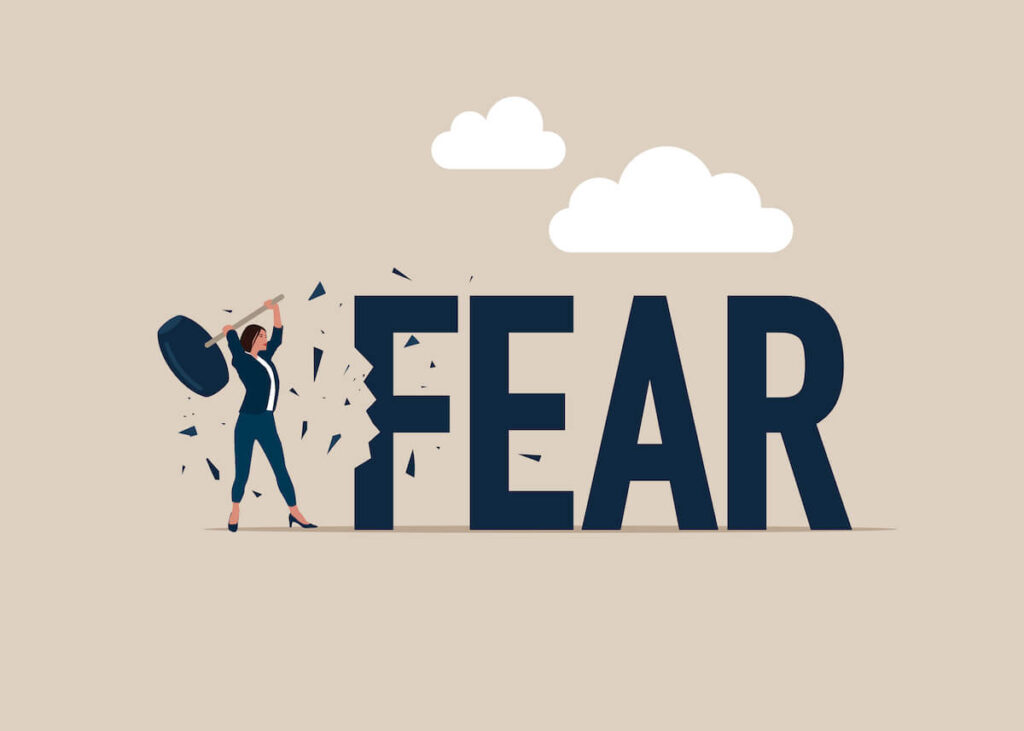
Have you ever felt scared about doing something? That’s fear and it’s something we all feel. It can pop up anytime just like a bad zit on your face when you’re unsure about something or need to make a big choice.
It’s important to learn how to handle this fear or it can consume you and affect your quality of life. Imagine if we could use that fear to become calmer and more sure of ourselves.
Stick with me as we look at ways to not just deal with fear, but use it to grow stronger.
Understanding Fear
Fear is like a warning signal inside us that pops up when there’s danger or trouble. It is our natural survival mechanism to prevent us from getting hurt.
However fear can be classified as a rational or irrational fear.
Rational fear is a response to a real and present threat or danger. It’s based on actual risks and helps protect us by triggering a fight-or-flight response. Feeling afraid when you see a snake on a hiking trail is a rational fear because it can be dangerous.
Irrational fear is not based on logical reasoning. It often stems from our thoughts or beliefs about potential scenarios that may never occur. One classic example of irrational fear is being terrified of flying which I have to a certain degree as well.
And there’s something called anxiety, which is fear’s cousin. The main difference is that fear is usually about something right in front of us, while anxiety is more about worrying about things that haven’t happened yet.
Strategies To Overcome Fear
Overcoming fear is a journey that involves understanding your emotions and learning techniques to manage them. Here are some proven techniques that you can use when fear strikes.
1. Deep Breathing Exercises
Deep breathing is a powerful tool to calm the mind and reduce the physical symptoms of fear. When we’re scared our breathing becomes shallow and rapid which can further increase our fear.
By consciously changing our breathing pattern, we can signal our body to relax.
How to Practice Deep Breathing
- Find a comfortable and quiet place to sit or lie down
- Close your eyes and try to clear your mind of distracting thoughts
- Take a slow, deep breath through your nose.
- Hold your breath for a second or two
- Exhale slowly through your mouth or nose and feel the fear leave your body
- Repeat this process for several minutes, focusing solely on your breathing
2. Mindfulness And Meditation

Mindfulness and meditation help you stay calm and focused on the present, not on your worries.
Here’s how to do it.
Find a quiet spot, sit down, and pay attention to your breathing. If you start thinking about what scares you, it’s okay. Just acknowledge it and then bring your mind back to your breath or what you’re doing.
You can practice this anytime, like when eating or walking.
For meditation, find a quiet place, close your eyes and breathe deeply. Pick something to focus on such as your breathing pattern. If you get distracted, no worries. Just go back to focusing.
Start with just 5 minutes a day and see how it feels. Both practices are about being in the moment and can help you feel less scared and more at peace.
3. Cognitive-Behavioral Techniques (CBT)
Cognitive-behavioral techniques help you deal with fear by changing the negative thoughts and beliefs that cause it. Let’s dive into how you can change the way you think about fear.
Identify Your Fearful Thoughts: Become aware of the specific thoughts that trigger your fear. These might bb negative predictions or beliefs about your inability to cope with certain situations.
How Valid Are These Thoughts: Once you’ve identified a fearful thought, challenge its accuracy. Ask yourself “Is there any truth to the thought?” or “Have I overcome similar situations in the past?”
Consider Alternative Outcomes: Fear often makes us feel that the world is ending. Instead, try to think of other more positive or likely outcomes.
Assess The Realistic Impact: Even if the feared event did happen, ask yourself how it would impact your life. Would it be as catastrophic as you imagine or could you find ways to cope and move forward?
Shift Your Perspective: Instead of viewing your fears as a threat, try to see them as a challenge or an opportunity for growth. This shift in perspective can reduce the intensity of your fear.
Practice Gratitude: Thinking about what you’re thankful for can help you worry less and feel more positive. Try listing things you’re grateful for every day.
4. Doing Exposure Therapy
Exposure therapy is all about facing your fears in a controlled and safe way. It’s all about taking small steps until the fear doesn’t bother you much.
Start with something slightly scary but manageable like speaking to a few friends if public speaking terrifies you. As you grow more comfortable, slowly challenge yourself with bigger tasks, such as presenting to larger groups.
The trick is to stay consistent and push yourself out of your comfort zone to build your confidence. Gradually ease yourself into your fears rather than confronting them all at once.
This approach helps lessen the fear over time, teaching you that you can handle more than you initially thought.
5. Get Physical

Exercise isn’t just good for your body but it’s a powerful tool for reducing fear and anxiety. When you’re physically active, your body releases endorphins that act as natural painkillers and mood elevators.
These endorphins help reduce the perception of fear and stress, making you feel more relaxed and happy.
Physical activity provides a distraction for your mind when it is deep in thought about your fear. Go for a brisk walk or job when you feel caught up in your fears.
6. Use Your Creativity As An Outlet
Creative activities like art, writing and music are powerful ways to face and express your fears. Art lets you see your fears outside of your mind, which can make them less scary. It also helps calm you down like meditation.
Writing lets you say what you’re afraid of in words, which can make your fears feel smaller and easier to handle.
Music can evoke your emotions, helping you to express your fears and feel less alone with them. These activities are tools that help you understand and ease your fears.
When To Seek Professional Help
Sometimes, fear and anxiety can feel too big to handle on your own. If your fear or anxiety stops you from doing everyday things or feels too overwhelming, it might be time to look for professional help.
Other signs include feeling sad or hopeless, having trouble sleeping or using substances to cope.
Start by talking to your doctor, who can guide you to the right resources. It’s important to find someone you feel comfortable with.
Seeking help is a sign of strength, not weakness. It’s the first step towards feeling better and taking control of your life.
Share Your Stories
Share your own stories of facing fear and the strategies that have helped you stay calm in the comments below. Your experiences could provide comfort and inspiration to others going through similar challenges.